
Where nuclear shows up next may matter almost as much as what gets built.
The next phase of nuclear might just depend on how widely society is willing to put it to work.
This week's signals suggest nuclear is beginning to re-enter some of society's most visible institutions, from universities and public energy systems to flagship deployment programs and space initiatives. Technologies accelerate when society is willing to use them in more places and for more purposes.
At the University of Illinois, the NRC has received an application to build and operate the KRONOS micro modular reactor. The project is intended to support research, education, and workforce development while helping demonstrate emerging microreactor technology [1]. This puts advanced nuclear to work inside a major academic institution, where future engineers, researchers, and decision-makers can encounter it as working infrastructure rather than distant theory.
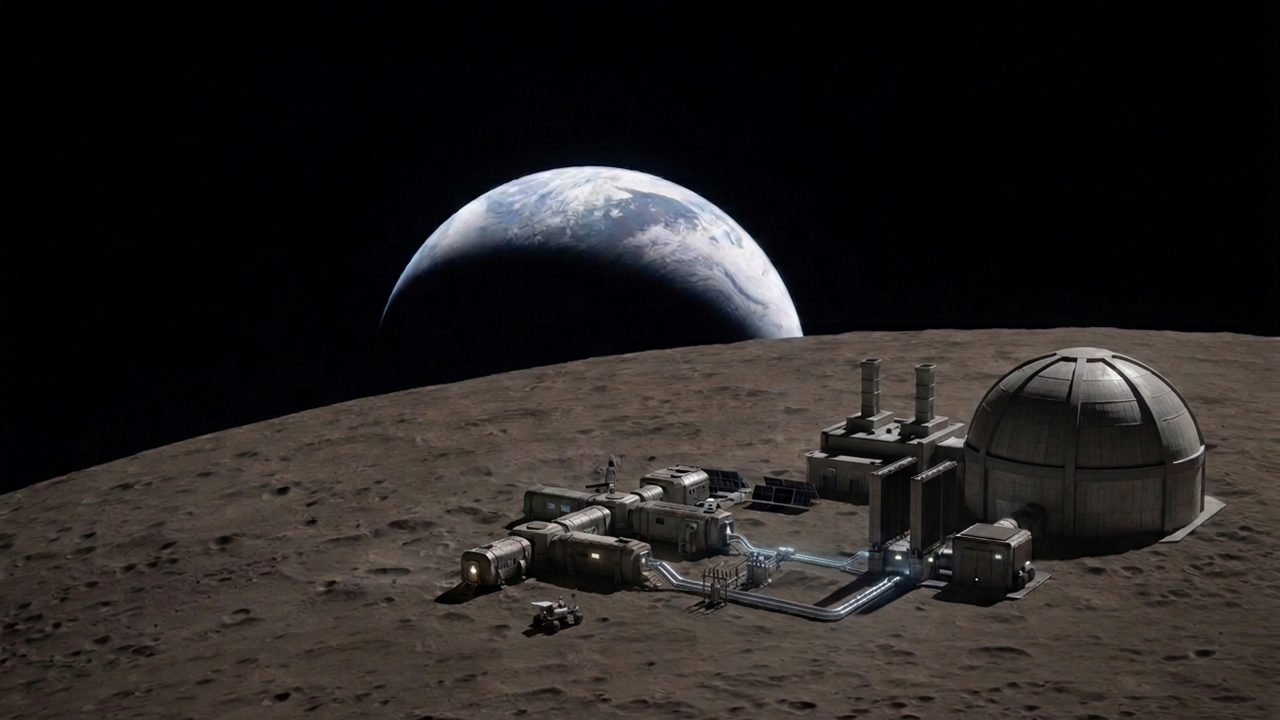
A different kind of legitimacy is forming beyond Earth. The White House has launched a coordinated federal initiative for space nuclear power, with a lunar surface reactor targeted for 2030 and an in-space reactor targeted for 2031 [2]. Space programs do not determine the commercial future of nuclear on their own. But they do expand the range of environments where society is willing to rely on nuclear as enabling infrastructure. When conditions are demanding and alternatives are limited, nuclear is being positioned to do real work.
At the same time, nuclear is being reabsorbed into public energy systems that once appeared politically closed off. In Japan, Kashiwazaki-Kariwa Unit 6 has resumed commercial operation after more than 14 years offline [3]. A restart like this is not just operational. It is symbolic and practical. It suggests that even in one of the most sensitive national contexts for nuclear energy, reactors can move from long suspension back into productive civic infrastructure.
Advanced nuclear is also finding a place inside regional industrial ecosystems. In the Netherlands, support around Thorizon links a non-nuclear molten salt test facility, a nuclear demonstrator, and a first commercial molten salt reactor in Zeeland, backed by utilities, research institutions, provinces, and development agencies [4]. This is notable not only because it involves an MSR, but because the reactor is not being advanced in isolation. It is being embedded in a regional network prepared to test it, validate it, and ultimately put it to work.
In the United Kingdom, Rolls-Royce SMR and Great British Energy - Nuclear have signed a landmark agreement covering three reactors at Wylfa [5]. This gives the week's pattern a more concrete expression. Nuclear is not only appearing in frontier and institutional settings. It is being positioned to do long-duration work inside a flagship national deployment program.
Nuclear is showing up in more settings where societies are willing to assign it real work. For much of the recent conversation, the focus has been on whether the sector could solve for deployment friction through licensing reform, fuel alignment, financing structures, and industrial capacity. Those questions still matter. But once those conditions begin improving, another question moves to the center: where is society willing to put nuclear to work? This week's signals suggest the answer is beginning to widen.
Over the past month, the signals pointed toward a more buildable nuclear future. Regulatory pathways were improving. Fuel systems were beginning to align. Industrial capacity was strengthening. This week extends that arc in a different way. It suggests nuclear is becoming more institutionally present again. That is a different kind of progress, because technologies become durable when they are built into the places that shape future talent, future systems, and future assumptions.
Nuclear's next phase may depend not only on how many reactors get approved or built, but on how many parts of society decide nuclear is useful enough, trusted enough, and necessary enough to put to work. This week, nuclear is appearing in places that shape talent, public confidence, industrial strategy, and frontier ambition. When a technology moves across that many layers at once, it begins to cross the threshold from sector-specific infrastructure to a broader societal capability. That may be why nuclear is beginning to show up in all the right places.
If nuclear is beginning to cross from sector-specific infrastructure into a broader societal capability, which setting will matter most in determining how far that transition goes: education, public infrastructure, flagship deployment programs, regional industry, or frontier missions?
More next week.
Dive deeper
- NRC Receives Application for Advanced Microreactor at University of Illinois The NRC received an application for a construction permit and operating license for the KRONOS micro modular reactor at the University of Illinois Urbana-Champaign. The project is positioned as a research, education, and workforce development asset as well as a technology demonstration.
- White House Launches Space Nuclear Initiative, Sets Timeline for Lunar Reactors The White House announced a federal space nuclear initiative with target dates for both a lunar surface reactor and an in-space reactor, reinforcing nuclear's role in sustained exploration and off-world infrastructure.
- Kashiwazaki-Kariwa 6 resumes commercial operation TEPCO's Kashiwazaki-Kariwa Unit 6 resumed commercial operation after more than 14 years offline, marking a major symbolic and operational milestone in Japan's nuclear recovery.
- Dutch agreement paves way for construction of commercial MSR The Netherlands is backing a phased roadmap around Thorizon's molten salt reactor concept, connecting test facilities, demonstration steps, and a first commercial reactor through a coalition of public and private institutions.
- Rolls-Royce SMR Signs Landmark Agreement For Three Reactors At Wylfa Rolls-Royce SMR and Great British Energy - Nuclear signed a landmark agreement covering three reactors at Wylfa, giving the UK program a site-specific, nationally visible SMR deployment pathway.
Process note: This brief is created using an AI-assisted workflow and reviewed before publication. Learn more about Finding Critical Path and how each edition is built at About — FindingCriticalPath.com.