
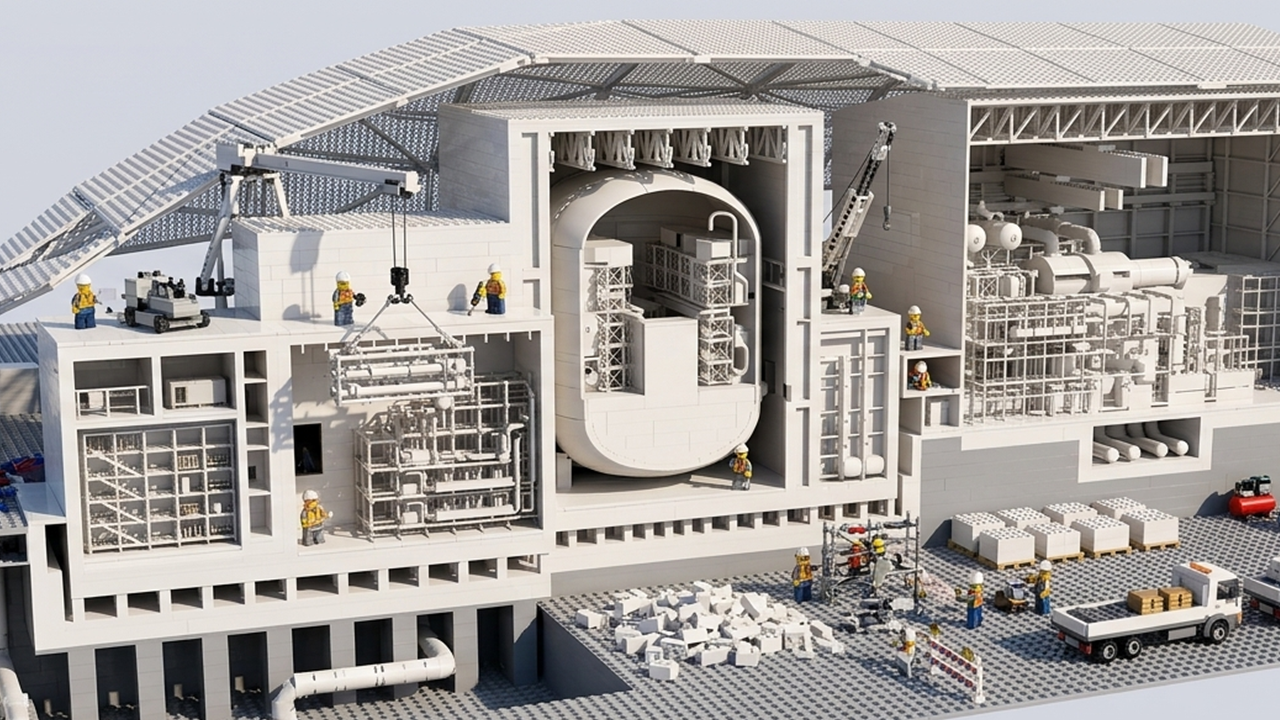
Technology launches industries. Industrial capacity sustains them. Energy systems expand when the infrastructure around them begins to grow.
The latest nuclear developments suggest that infrastructure may be forming around the next generation of nuclear energy.
This week, several of the supporting systems around nuclear energy began moving at the same time. Across policy, operations, fuel supply, manufacturing partnerships, and workforce development, the foundation required to support the energy supply of tomorrow is taking shape. The industrial capacity behind nuclear deployment appears to be strengthening.
In the United Kingdom, the government granted nuclear justification approval for the Rolls-Royce small modular reactor design [1]. Nuclear justification does not authorize construction, but it establishes that the societal benefits of a technology outweigh its potential impacts. Approvals like this move a reactor design closer to becoming a deployable component of the national energy system. Policy alignment is one of the first building blocks required before an industrial ecosystem can grow around a technology.
In the United States, policymakers are working to increase electricity generation from the existing nuclear fleet by five gigawatts [2]. The effort focuses on uprates, operational improvements, and extended plant lifetimes. Existing reactors are being treated as expandable infrastructure capable of delivering additional clean electricity while the next generation of reactors moves toward deployment.
The nuclear fuel supply chain also continued to show signs of strengthening this week. Urenco reported that its enrichment order book has reached record levels [3]. Demand growth in enrichment markets often reflects expectations for higher reactor utilization and future deployment. Fuel infrastructure typically expands ahead of the reactors it will ultimately support.
Another fuel-related development came from an expanded partnership between Framatome and NuScale [4]. The two companies are advancing fuel design and fabrication capabilities tailored for small modular reactors. Reactor innovation often captures the spotlight, yet fuel qualification and fabrication capacity determine whether new designs can operate reliably across multiple deployments.
Workforce development surfaced as another piece of the puzzle. The U.S. Department of Energy awarded Penn State six million dollars to expand nuclear workforce programs [5]. Engineering pipelines take years to develop, and investments like this signal expectations that demand for nuclear expertise will continue to grow.
Each of these developments sits in a different layer of the nuclear ecosystem. Policy approvals, operational expansion, fuel cycle activities, and workforce preparation are all necessary building blocks needed to meet the nuclear energy demands of tomorrow. The simultaneous growth across all these layers may indicate more than individual sector growth. All together these developments start to look less like isolated progress and more like pieces of a larger system coming together.
Large systems rarely emerge from a single breakthrough. They grow when multiple enabling systems begin advancing in parallel and with a degree of coordination. Energy infrastructure grows through accumulation. Technologies mature. Supply chains expand ahead of demand. Workforce pipelines anticipate future projects. Infrastructure is optimized while the next generation of technology approaches deployment. Over time these elements begin to reinforce one another. Each development strengthens a different layer of the nuclear ecosystem, and several parts of the sector appear to be moving in a complementary direction.
If that alignment continues, the impact could extend well beyond the individual developments that surfaced this week. Industrial capacity compounds. Each additional capability makes the next step easier. Fuel supply enables reactor deployment. Reactor deployment supports manufacturing scale. Manufacturing scale supports workforce growth. Over time the system begins to reinforce itself. The result begins to resemble the early stages of an industrial strategy forming around nuclear energy. A system where the sum becomes larger than the individual parts.
The reactors that will anchor the next generation of nuclear power are still advancing through licensing and demonstration. Around them, the systems required to support that future appear to be assembling piece by piece.
Over the past several weeks we have looked at regulatory reform, fuel alignment, deployment signals, and the financial architecture supporting new projects. This week's signals suggest those pieces may now be beginning to assemble into something larger. The question ahead may extend beyond how many reactors can be built.
It may depend on how quickly the industrial foundation beneath them continues to grow.
More next week.
Dive deeper
- UK Government Grants Nuclear Justification For Rolls-Royce SMR Design The UK government has granted nuclear justification approval for the Rolls-Royce Small Modular Reactor design, enabling it to proceed with further development and deployment. This approval marks a significant step in advancing the UK's domestic SMR technology for clean energy generation.
- US aims for 5 GW more from existing nuclear The United States government has set a goal to increase electricity generation by 5 gigawatts from existing nuclear power plants. This initiative focuses on extending the operational life and enhancing the output of current nuclear facilities to support clean energy goals. The effort aims to leverage existing infrastructure to contribute significantly to the nation's energy mix.
- Urenco reports order book at record levels Urenco has reported that its order book has reached record levels, indicating strong demand for its uranium enrichment services. This milestone reflects growing market interest and confidence in Urenco's capabilities within the nuclear fuel supply chain.
- Framatome and NuScale expand fuel partnership Framatome and NuScale Power have expanded their partnership to support fuel supply for NuScale's small modular reactors. The collaboration aims to enhance fuel design and fabrication capabilities to meet the specific needs of NuScale's SMR technology. This expansion strengthens the supply chain and supports the deployment of advanced nuclear reactors.
- Penn State Awarded $6 Million to Help Grow Nuclear Workforce Penn State University has been awarded $6 million by the U.S. Department of Energy to support initiatives aimed at expanding and strengthening the nuclear workforce. This funding will help develop educational programs and training to prepare more professionals for careers in the nuclear energy sector.
Process note: This brief is created using an AI-assisted workflow and reviewed before publication. Learn more about Finding Critical Path and how each edition is built at About — FindingCriticalPath.com.