
Once is a headline. Twice may be coincidence. By the third time it becomes a signal. When new nuclear advances simultaneously in four countries around the globe, the message is clear. New nuclear is happening now.
This week's signals came from four countries. The United States, the United Kingdom, Sweden, and Korea each surfaced developments enabling advanced nuclear and small modular reactors. Each story stands on its own. Together they point to a broader pattern. Across several regions, governments and regulators appear to be clearing a path for the next generation of nuclear reactors.
In Sweden, the government has proposed legislation that would ease restrictions on building new nuclear plants. The proposal would remove existing limits on the number of reactors that can be built and allow new plants to be constructed at additional sites. The move reflects a shift in national energy policy as Sweden evaluates nuclear as part of its long-term energy strategy.
In the United States, the Nuclear Regulatory Commission has cleared TerraPower's Natrium reactor for construction in Wyoming. This is the first commercial reactor construction approval issued by the NRC in nearly a decade. Approvals like this do more than advance a single project. They show that the regulatory pathway for new reactors is active again.
Another development in the United States points to the infrastructure forming around these technologies. The Department of Energy has established the Nuclear Energy Launch Pad. The initiative is intended to bring together developers, national laboratories, investors, and other partners to accelerate the commercialization of advanced nuclear technologies.
In the United Kingdom, Great British Energy Nuclear has received a licence to generate electricity. The licence supports the country's effort to develop and deploy small modular reactors as part of its future energy system.
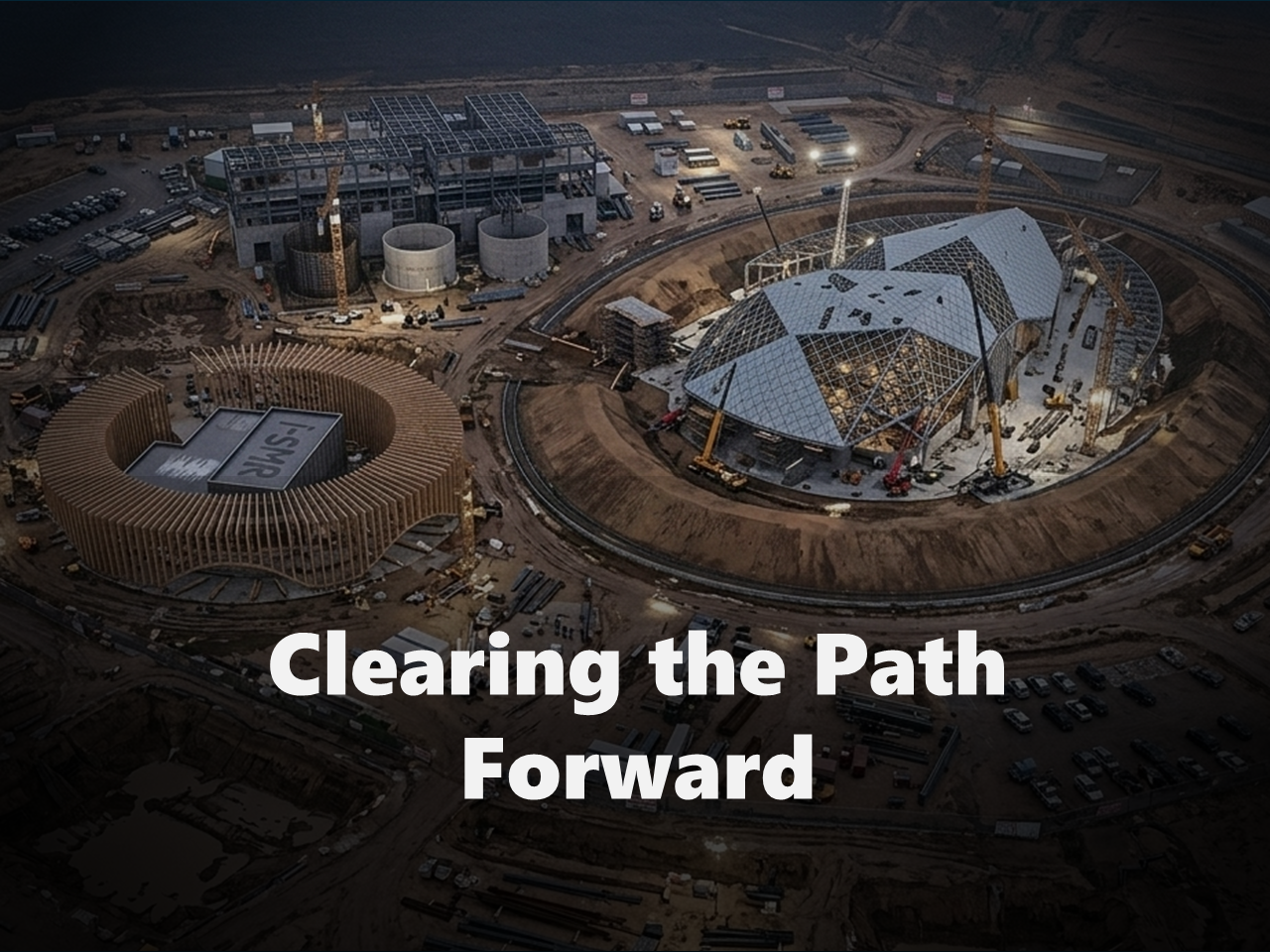
In Korea, developers are pursuing standard design approval for the i-SMR reactor. Standard design approval allows regulators to review a reactor design in advance of individual project applications. This approach can simplify future licensing efforts by establishing a design that can be referenced across multiple deployments.
Each of these developments sits at a different stage of the deployment process. Policy in Sweden. Licensing progress in the United States. Program development in the United Kingdom. Design standardization in Korea.
None of these steps alone determines the future of advanced nuclear. Reactor technology must be supported by policy, regulation, financing, and repeatable designs. Progress in one area only becomes meaningful when the other pieces begin to move as well.
What makes this week notable is that several of those pieces are advancing at the same time in different parts of the world.
When that happens, expectations begin to shift. Regulatory precedents travel. Governments observe how other nations structure their programs. Developers gain reference points for how projects can move from design to construction.
The technology behind small modular reactors has been developing for years. What appears to be taking shape now is the institutional environment that allows those reactors to move from plans to breaking ground.
From Washington to London, from Stockholm to Seoul, governments and regulators are clearing the path.
When that happens in many places at once, it begins to look less like isolated progress and more like the early stages of deployment at scale.
More next week.
Dive deeper
- Swedish Government Proposes Legislation To Ease Rules For Building New Nuclear Plants The Swedish government has proposed new legislation aimed at easing the regulatory rules for constructing new nuclear power plants. This move is intended to facilitate the development and expansion of nuclear energy capacity with a focus on streamlining permitting and approval processes.
- GBE-N granted licence to generate electricity Great British Energy - Nuclear (GBE-N) has been granted a licence to generate electricity by the UK's gas and electricity markets regulator. This marks a key regulatory milestone enabling the company to deliver Europe's first SMRs.
- US establishes Nuclear Energy Launch Pad The US Department of Energy has announced the creation of a Nuclear Energy Launch Pad to accelerate the development and deployment of advanced nuclear reactor technologies. The initiative aims to support innovation by providing access to national laboratory resources, technical expertise, and testing facilities for private companies and startups.
- A Historic First: NRC Clears TerraPower's Natrium Nuclear Reactor for Construction The U.S. Nuclear Regulatory Commission (NRC) has granted approval for the construction of TerraPower's Natrium advanced nuclear reactor, marking the first time a nuclear regulatory body has cleared this next-generation design. This milestone enables TerraPower to proceed with building the Natrium reactor, which integrates a sodium-cooled fast reactor with a molten salt energy storage system.
- Standard design approval sought for i-SMR A standard design approval application has been submitted for the i-SMR, a small modular reactor design. This step is crucial for regulatory acceptance and potential deployment of the i-SMR technology. The approval process marks a significant milestone in advancing SMR commercialization in Korea.
Process note: This brief is created using an AI-assisted workflow and reviewed before publication. Learn more about Finding Critical Path and how each edition is built at About — FindingCriticalPath.com.